Stone and memory
Heritage
Shusha's architecture is a chronicle in stone: mosques and mausoleums, fortress walls and old mansions that keep the memory of the city's golden age.
Stone and memory
Shusha's architecture is a chronicle in stone: mosques and mausoleums, fortress walls and old mansions that keep the memory of the city's golden age.
Every building of Shusha is a page of history. Much was damaged during the years of occupation, and today the monuments are being carefully restored.
Heritage
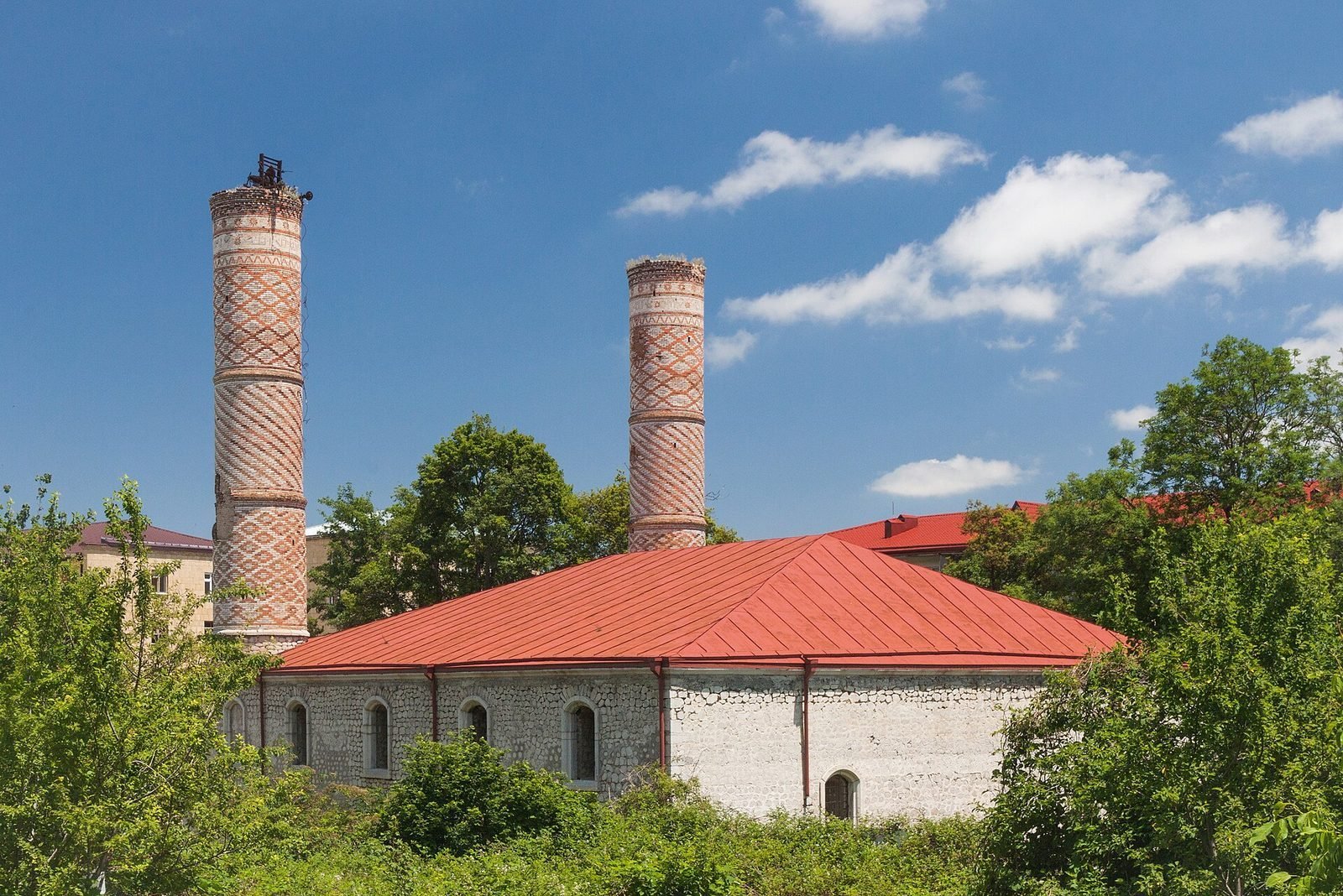
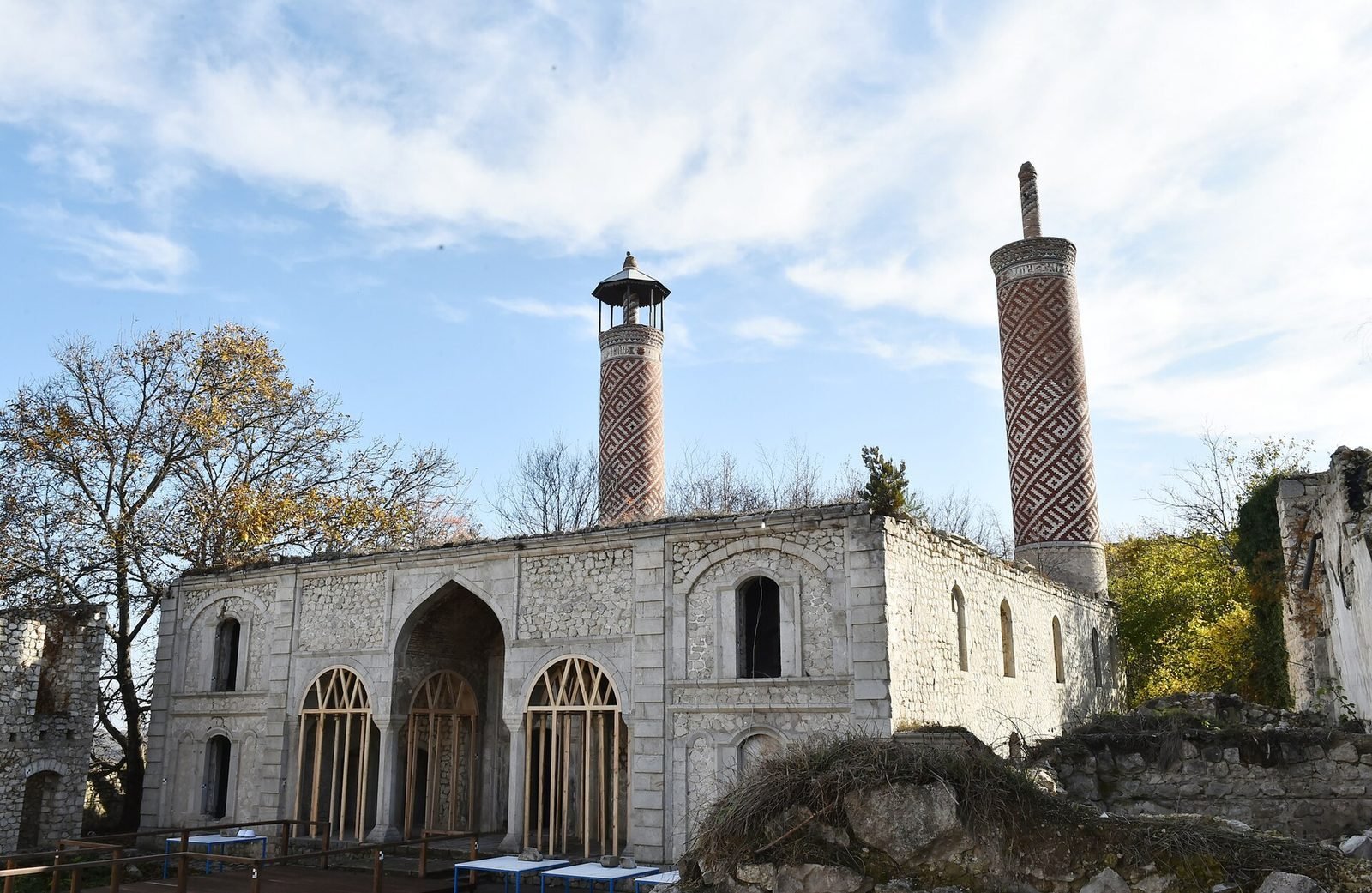
The symbols of Shusha are the Govhar Agha mosques: the Upper and the Lower. Their slender minarets towered over the city for centuries. Today the mosques are being restored to their historical look.
Nearby are old palatial houses, fortress walls and gates, among them the famous Ganja Gate. Together they form the unique image of a mountain city.
Heritage
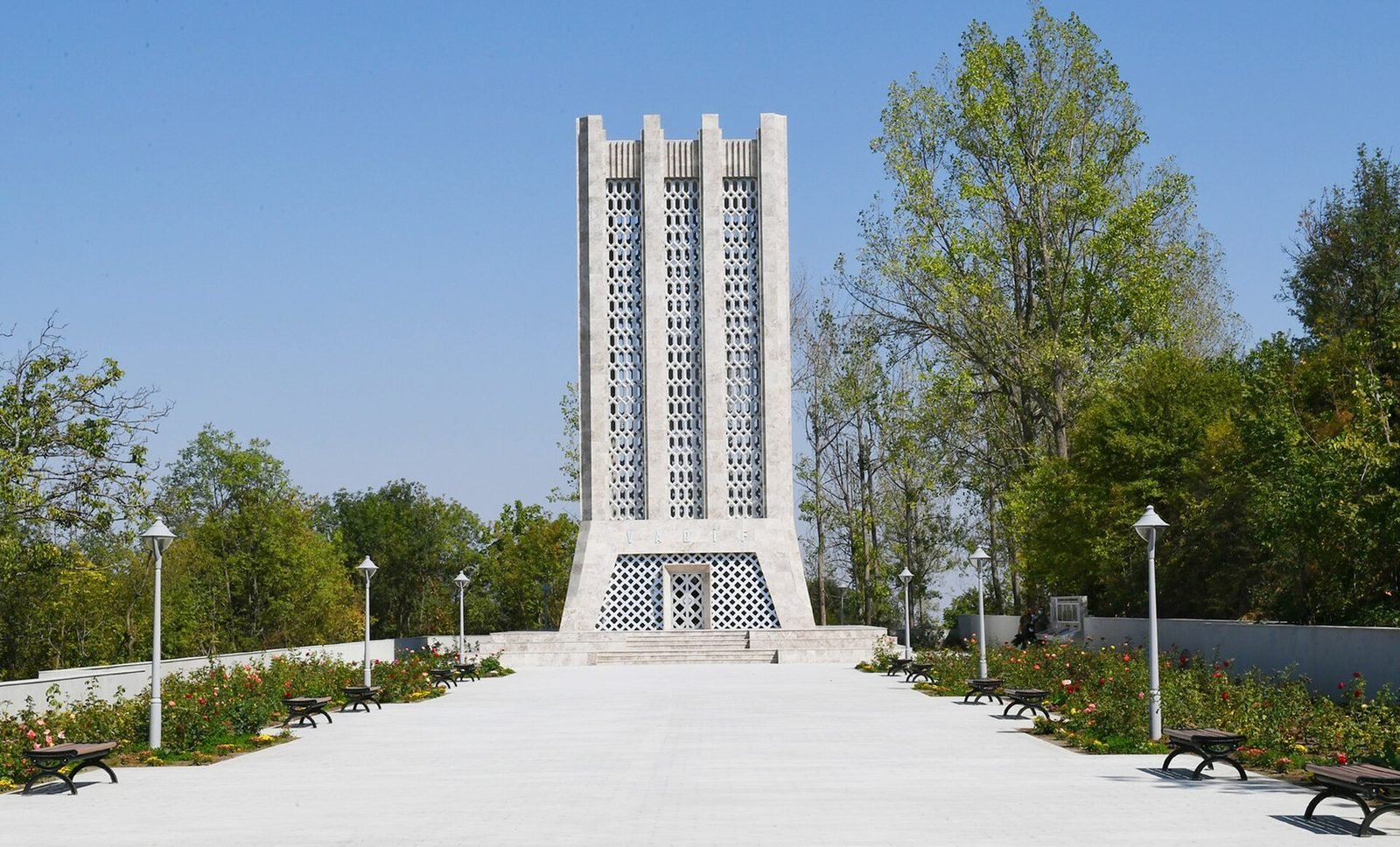
Shusha's pride is the mausoleum of the poet Vagif and the memorial places tied to the city. And above it all stretches the Jidir Plain, overlooking the mountains and gorges of Karabakh.
It is here, on the Jidir Plain, that the khari-bulbul grows — the flower that has become a living symbol of Shusha and of all Karabakh.
Monuments of Shusha
The Upper and Lower mosques — symbols of the city.
The museum-mausoleum complex of the great poet.
The walls and gates of the old mountain fortress.
The mountain plateau and home of the khari-bulbul.
The condition of the monuments changes as restoration proceeds; information is given from open sources.